
ADP Student Brittany Hart Secures LEND Traineeship
The paid education program is offered at UPMC Children’s Hospital
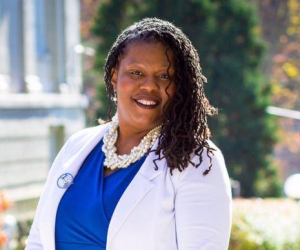
For Brittany Hart, becoming a LEND trainee wasn’t just a graduate school accomplishment, it was the realization of a goal that brought her across the country to the University of Pittsburgh School of Education.
Since August, the second-year Master of Science in Applied Developmental Psychology student has been engaged in a funded traineeship with the Leadership Education in Neurodevelopmental Disabilities (LEND) Center at UPMC Children’s Hospital of Pittsburgh.
Hart is one of 18 students from a range of academic and professional disciplines selected from across Pittsburgh-area universities for the year-long, highly competitive program. She is one of just two psychology students chosen.
“It was a full circle moment,” Hart said about receiving the news. “It was one of the main reasons that I even came to the University of Pittsburgh.”
The LEND program is funded by the U.S. Health Resources Service Administration’s Maternal and Child Health Bureau and is housed within Pitt’s School of Medicine in the Department of Physical Medicine and Rehabilitation. The Pittsburgh LEND Center is one of 63 program sites across the United States.
Hart’s path to LEND began during her master’s program search. While exploring Pitt’s Applied Developmental Psychology program online, she discovered a link to LEND toward the bottom of the webpage.
“Immediately when I read the name, it caught my eye – Leadership Education in Neurodevelopmental Disabilities,” she recalled. “I was like, ‘this is something I want to do.'”
At the new student orientation, Hart approached School of Education Professor Stefano Bagnato, who is now her faculty advisor and LEND mentor, to express her interest in the program.
“He reassured me that it would be able to work out,” Hart said.
A Personal Connection to the Field
Hart’s passion for supporting children with developmental disabilities, particularly the autism spectrum disorder, stems from her own family experience. Growing up in the Bay Area of California, she has two male cousins diagnosed with autism, but their conditions were rarely discussed in the family.
“I loved my cousins,” Hart said. “I noticed how they were developing a little bit differently, but I didn’t have the knowledge behind it to understand what actually was going on.”
That changed during her senior year of high school when an AP Psychology course helped her connect the dots. She soon shaped her career focus into a desire to address disparities in diagnosis and treatment within underserved communities.
“In minority communities, there’s a lot of stigma and that really stems from misinformation, or not feeling comfortable or welcomed in the healthcare setting,” said Hart, whose professional interests include social determinants of health. “I really want to be able to bridge that gap and make sure that I’m caring for all types of families, but especially in minority communities, because they often fall through the cracks.”
Standing Out Among Peers
According to Bagnato, Hart’s selection was particularly impressive given the competitive applicant pool.
In addition to other psychology majors from nearby universities, the traineeship is open to clinical psychologists, physical therapists, occupational therapists, speech therapists, social workers, nurses, and physicians in training.
Bagnato, who helped establish the Pittsburgh LEND Center in 1995, is not surprised at Hart’s success.
“I get laudatory comments from the other faculty about Brittany’s maturity and natural leadership skills,” he said.
Bagnato selected her as a teaching associate for two of his courses this year and has provided opportunities for Hart to present course content to the class. She excelled at that, too.
“She just knocked it out of the park,” he said. “She’s really gracious, personable, and very committed; she needs to go on and get her doctorate at some point. She’ll excel in a Developmental Psychology doctoral program.”
Immersed in Interdisciplinary Learning
The LEND leadership traineeship, which runs through April, provides Hart with hands-on experience each week. She observes autism diagnoses and interventions at the hospital’s outpatient area, participates in a team-based program within LEND called CARES (Connection, Advocacy, Resources, Empowerment, and Support), and works alongside students from nursing, medicine, physical therapy, speech-language pathology, and other disciplines.
“It’s really cool to see how each field comes together to be a part of making a change in children’s and families’ lives,” Hart said. “Being able to talk with my peers about their disciplines opens up my eyes to the different possibilities.”
The LEND program emphasizes family-centered care and individualized approaches—principles Hart says align closely with her values.
“Even though I may have knowledge about something, I’m not going to override the family’s needs and wants,” she explained. “It’s about what will help their child reach their greatest life potential.”
Hart plans to work in the field for a year or two after completing her MS in Applied Developmental Psychology before, as Bagnato hoped to hear, pursuing a PhD in pediatric neuropsychology.
Advice for Future Applicants: ‘Determination is key’
For other ADP students considering competitive opportunities, Hart offers straightforward guidance: “The first step is just applying. Sometimes you may get in your head and say, ‘I don’t know if I’m able to accomplish that,’ but having determination is key.”
Hart also emphasized the importance of faculty mentorship, encouraging students to “Really lean on your professors. They have been in your shoes already.”