
Betsy Levine Brown Returns to Pitt to Lead the Office of Child Development (Q&A)
The health and human development professor takes the helm as OCD celebrates its 40th anniversary
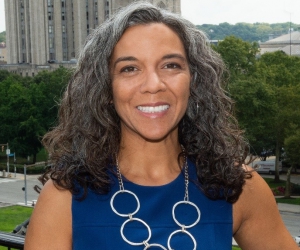
Betsy Levine Brown is a professor in the Department of Health and Human Development and, in August, began her tenure as director of the University of Pittsburgh’s Office of Child Development (OCD), which celebrated its 40th anniversary in 2026.
Her arrival to the faculty is a homecoming on multiple fronts: to her hometown of Pittsburgh, to the School of Education, where she earned her PhD in Applied Developmental Psychology in 2011, and to the Office of Child Development, where she spent a three-month summer internship in college under the leadership of the late Kathy Rudy.
Levine Brown’s research centers on school-based mental health and the social and emotional competencies of teachers and students. We asked Levine Brown about her vision for OCD (and her unique connection to the office), what drew her to education, and her advice for students.
Welcome back to the School of Education! What do you hope to accomplish as OCD’s new leader?
Vital to OCD’s longstanding reputation and academic regard is the central mission to respond innovatively, critically, and responsively to challenges facing children, families, and communities of Pittsburgh. We will continue to meet this mission by expanding our multidisciplinary projects through sustainable partnerships that improve the health, education, and well-being of children, families, and communities, and by sharing the impact of these projects and programs with international, national, state, and local audiences.
OCD, undergirded by a talented group of scholars and staff, engages directly with partners in problems of practice to translate research into strengths-based, actionable solutions that generate meaningful and sustained impact for children, families, schools, and communities.
What drew you to education and the study of youth mental health?
My professional experiences as an elementary educator across both urban and rural settings continue to ground my research interests in school-based mental health and the social and emotional competencies of teachers and students. Working directly with children, families, and educators showed me how deeply students’ mental health and well-being are connected to their experiences in school, their relationships, and the broader communities in which they live and learn.
Those experiences sparked my commitment to understanding how schools can serve as critical settings for promoting mental health, preventing challenges, and ensuring that all young people have opportunities to thrive.
How do you stay inspired in your work as an educator and researcher?
For me, it’s all about the kids, and about strengthening the schools and supporting the educators and staff who show up for them every day. I stay inspired by knowing that our work has the potential to make a real difference in children’s lives, while also helping the adults and systems around them thrive. When research can translate into something that makes a school and community stronger, supports school professionals, or helps a child feel more connected and able to succeed, that is what keeps me motivated.
What might surprise your students and colleagues about you?
A fun fact that surprises many people is that my connection to the Office of Child Development actually began when I was a college student! I spent a three-month summer internship at OCD, where I had the incredible opportunity to learn from the late Kathy Rudy. Her mentorship sparked my passion for multidisciplinary collaboration, community-based research, and advocacy, and ultimately helped shape the scholar, educator, mentor, and community advocate I am today.
I also had the opportunity to sit in on leadership meetings with former OCD directors Chris Groark and Bob McCall. They welcomed an enthusiastic undergraduate into the conversation and genuinely valued my perspective. That experience left a lasting impression on me about the power of mentorship, respect, and inclusion. So, in some ways, coming back to lead OCD feels a little like coming full circle, and I’m excited to help create those same kinds of meaningful opportunities for others.
What advice do you have for students entering education and applied developmental psychology, in particular?
My advice is to stay curious, stay connected to the people and communities you hope to serve, and never lose sight of why you chose this work in the first place. Education and human development are deeply relational professions. The most important thing we can do is listen, to children, families, educators, and communities, and then use what we learn to inform how we teach, support, and create change.
For students entering applied developmental psychology in particular, I would encourage them to think broadly about where and how their knowledge can make a difference. Learn the science, but also learn how to translate that science into practice. Seek experiences that allow you to work alongside communities and professionals, ask meaningful questions, and see firsthand how developmental knowledge can improve the systems that support children and families.
And finally, I would remind students that they do not have to know exactly where their career will take them. Be open to opportunities, find mentors who believe in you, and look for ways to use your knowledge and strengths in service of others. The path may not always be linear, but if you remain grounded in purpose and committed to learning, you can make a meaningful difference.